
Marketplace Development: Lessons from Building Equipment Rentalz
3 months from idea to a functioning two-sided marketplace. The chicken-and-egg problem nearly killed it twice.

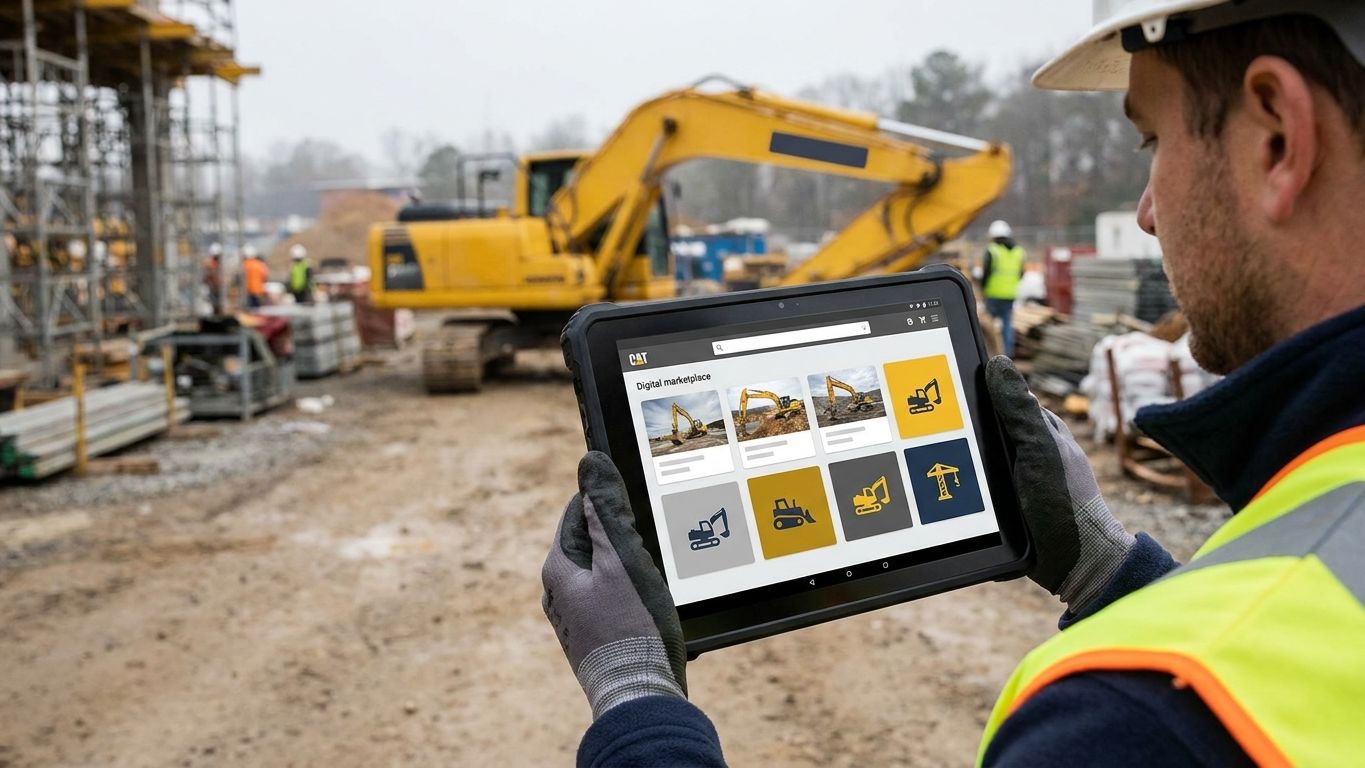
3 months. That's how long it took to go from "I want an equipment rental marketplace" to a live product with suppliers listing inventory and renters placing orders. Equipment Rentalz launched with 47 suppliers and processed its first transaction 11 days after going live.
Marketplaces are the hardest product category we build. Harder than SaaS. Harder than mobile apps. The reason is simple: you're building one product for two completely different users with conflicting priorities, and neither group will show up unless the other one is already there.
We've built marketplace products before, but Equipment Rentalz taught us more about the chicken-and-egg problem, payment flows, and supply-side growth than any previous project. This is the unfiltered version.
Key Takeaways > - Solve supply-side first. Renters won't come to an empty marketplace. > - Payment escrow is the highest-complexity feature in any marketplace. Budget 3-4 weeks for it. > - The chicken-and-egg problem has exactly one solution: manual hustle on the supply side before writing code.
The Chicken-and-Egg Problem (And How We Almost Failed)
Every marketplace faces the same impossible question: how do you get suppliers without renters, and renters without suppliers?
Equipment Rentalz nearly stalled twice on this problem. The first time was during scoping, when we realized the client had zero supplier commitments. The second was three weeks post-launch, when supplier activity dropped because renters weren't showing up fast enough.
What worked: Before writing a single line of code, the founder spent 4 weeks calling equipment owners directly. Not emailing. Calling. By the time we started development, they had verbal commitments from 50+ suppliers. That meant we launched with inventory on day one.
What didn't work: Expecting the marketplace to grow organically after launch. It doesn't. The first 3 months require active supply management - calling suppliers who haven't listed, helping them photograph equipment, and manually matching early renters with available inventory.
Here's a take that marketplace purists hate: your first 100 transactions should be manually facilitated. Use the platform for listing and payments, but do the matching yourself. This gives you data on what renters actually search for, which categories need more supply, and where the UX breaks down. Automation comes after you understand the patterns.
Architecture Decisions That Saved (And Cost) Us Time
Multi-tenant from day one: Each supplier gets their own dashboard with inventory management, booking calendar, and earnings tracking. Each renter gets a search interface, booking flow, and rental history. The admin gets a god-view dashboard with dispute resolution, payment monitoring, and supplier verification tools.
Three distinct user experiences in one product. This is why marketplaces cost more than single-sided SaaS.
What we built on: Next.js for the frontend (server-rendered for SEO - renters need to find equipment through Google), PostgreSQL for the database, and Stripe Connect for payments. This stack is boring and that's the point. Every week we didn't spend debugging infrastructure was a week we spent on marketplace-specific logic.
The database schema decision that mattered most: We separated listings, availability, bookings, and transactions into distinct tables with clear relationships. Some marketplace tutorials suggest a simpler schema. That simplicity collapses the moment you need to handle a booking that spans multiple days with different pricing tiers, a partial cancellation, or a dispute where the equipment was returned damaged.
Our schema had 23 tables at launch. That sounds heavy for an MVP. But 8 of those tables handled edge cases in the booking and payment flows that would have been nightmares to retrofit later.
Payments: The 3-Week Sprint That Became 4
Payment processing in a marketplace is fundamentally different from payments in SaaS. In SaaS, a customer pays you. In a marketplace, a renter pays the platform, the platform takes a commission, and the platform pays the supplier. That triangle introduces complexity at every step.
What Stripe Connect handles for you:
- Supplier onboarding (identity verification, bank account linking) - Split payments (automatic commission deduction) - Tax form generation (1099s for US, tax reporting for EU) - Dispute and chargeback management
What you still need to build:
- Escrow logic (hold payment until rental period starts or equipment is confirmed received) - Refund workflows (full refund, partial refund, credit for next rental) - Commission calculation (flat fee, percentage, tiered based on volume) - Payout scheduling (weekly, biweekly, monthly, with minimum thresholds) - Failed payment handling (what happens when a card declines mid-rental?)
We estimated 3 weeks for the payment system. It took 4. The extra week went into edge cases: what happens when a supplier cancels after the renter has already paid? What about a rental extension that crosses a billing period? What if the renter disputes a damage claim?
Each edge case is 1-2 days of engineering. There are always more edge cases than you expect. Budget for that.
Cost breakdown for the payment system alone: - Stripe Connect integration: 5 days - Escrow and release logic: 4 days - Refund and cancellation workflows: 3 days - Commission and payout scheduling: 3 days - Edge cases and error handling: 5 days
Total: roughly 4 weeks of a senior developer's time. At our rates, that's approximately EUR 12k-15k just for payments. This is why marketplace development costs more than standard SaaS.
Supply-Side Features That Actually Mattered
We built 14 features for suppliers. Six of them drove 80% of the engagement.
1. Bulk listing upload. Suppliers with 20+ items won't list them one by one. A CSV upload with image batch processing saved suppliers hours and increased average listings per supplier from 3 to 11.
2. Availability calendar. Drag-to-block dates, recurring unavailability, and automatic blocking after a booking. Simple concept, but the UI needed to be dead simple because suppliers ranged from tech-savvy rental companies to individual equipment owners who primarily use their phone.
3. Pricing flexibility. Daily, weekly, and monthly rates with automatic discounting for longer rentals. Suppliers set their own prices. The platform suggests pricing based on comparable listings (we built a simple pricing algorithm using category averages).
4. Booking notifications. SMS and email when a new booking request comes in. Response time correlates directly with conversion rate. Suppliers who responded within 2 hours had 3x the booking completion rate of those who took 24+ hours.
5. Earnings dashboard. Running total of earnings, pending payouts, and commission breakdown. Suppliers check this daily. It's the feature that keeps them coming back to the platform even when bookings are slow.
6. Damage protection settings. Suppliers set a security deposit amount per listing. The platform holds the deposit through Stripe and releases it 48 hours after the rental ends unless a damage claim is filed. This single feature resolved the biggest objection suppliers had: "What if they break my equipment?"
The other 8 features (profile customization, review responses, analytics, promotional pricing, featured listings, supplier tiers, referral tracking, and support tickets) were nice-to-have. We shipped them, but they could have waited for v2 without impacting the marketplace's viability.
Demand-Side Features: Search and Trust
Renters need two things: the ability to find what they're looking for and the confidence that the supplier is legitimate.
Search: Full-text search with filters for category, location (radius-based), price range, availability dates, and rating. We used PostgreSQL's full-text search capabilities instead of Elasticsearch. For a marketplace with fewer than 10,000 listings, PostgreSQL handles search without the operational overhead of a separate search service.
Trust signals: Supplier verification badges (ID verified, business verified), ratings and reviews, response time display, and a "super supplier" designation for those with 50+ completed rentals and 4.5+ ratings. These trust signals increased booking conversion by roughly 35% in the first month after we added them.
Booking flow: Search, select dates, request booking, supplier confirms, payment is charged, rental begins. Five steps. We tested a 3-step flow (search, book, pay) but suppliers wanted the ability to confirm bookings before commitment. The confirmation step added friction but reduced cancellations by 60%.
What We'd Do Differently
Launch with fewer categories. Equipment Rentalz launched with 12 categories (construction, landscaping, event, photography, etc.). We should have launched with 3 where the founder had the strongest supplier relationships and expanded after proving the model. Thin categories (2-3 listings) look worse than no category at all.
Build supplier onboarding as a guided flow. We built a form. We should have built a step-by-step wizard with prompts, photo tips, and pricing guidance. The suppliers who listed successfully were the ones who called the founder for help. That help should have been embedded in the product.
Invest more in SEO from day one. Marketplace SEO is a compounding advantage. Every listing is a potential long-tail search result. We added SEO optimization in month two, but the pages that were indexed from launch had a 6-week head start in Google's ranking.
The Numbers After 3 Months
- 47 active suppliers at launch, 89 by month three - 312 listings in 8 active categories - EUR 23k in gross merchandise value processed - 14% platform commission rate - Average booking value: EUR 340 - Supplier response time: 4.2 hours (median) - Renter return rate: 28% (booked more than once)
These aren't spectacular numbers. They're marketplace numbers. Marketplaces grow slowly until they hit a density threshold where network effects kick in. For Equipment Rentalz, that threshold was roughly 150 suppliers in the top 3 categories. Below that, renters couldn't always find what they needed. Above it, the marketplace became self-reinforcing.
Cost Breakdown of the Full Build
Total project cost: approximately EUR 55k over 3 months.
- Product scoping and design: EUR 8k (2 weeks) - Core marketplace (listings, search, profiles): EUR 15k (4 weeks) - Payment system (Stripe Connect, escrow, payouts): EUR 12k (4 weeks) - Supplier dashboard and tools: EUR 8k (2 weeks) - Admin panel and dispute resolution: EUR 5k (1.5 weeks) - Testing, QA, and launch: EUR 4k (1 week) - Documentation and handoff: EUR 3k (1 week)
This is at the lower end of marketplace development costs because we made aggressive scope decisions early and used Stripe Connect instead of building payment infrastructure from scratch. A marketplace with custom payment processing, mobile apps, and real-time features would cost EUR 100k+.
Frequently Asked Questions
How much does it cost to build a marketplace MVP?
A two-sided marketplace MVP costs EUR 50k-80k with payment processing, supplier and buyer dashboards, and search functionality. Equipment Rentalz cost approximately EUR 55k over 3 months. Adding mobile apps, real-time messaging, or custom payment flows pushes costs to EUR 100k+.
How do you solve the chicken-and-egg problem in a marketplace?
Manual hustle on the supply side before writing code. The Equipment Rentalz founder secured commitments from 50+ suppliers through direct phone calls before we started development. Your first 100 transactions should be manually facilitated while you learn the matching patterns that will later be automated.
How long does it take to build a marketplace?
A functional marketplace MVP takes 3-4 months. Equipment Rentalz shipped in 3 months with 23 database tables, Stripe Connect payments, supplier and renter dashboards, and an admin panel. The payment system alone took 4 weeks. Budget for complexity in escrow, refunds, and edge cases.
Should I build a marketplace or a SaaS product?
If your value comes from connecting two groups of users, build a marketplace. If your value comes from a tool that one group uses, build SaaS. Marketplaces are harder to build, harder to grow, and harder to monetize in year one - but they create stronger network effects and defensibility long-term.
*Planning a marketplace build? Book a 30-minute scoping call and we'll help you map the supply-side strategy before writing code. Or see our SaaS Product Build service for details on marketplace development pricing.*
Related serviceSaaS Product Build
Notes on building fast.
One short email a month from the RalphNex team. Projects we shipped, ideas we tested, and what worked.
No spam. Unsubscribe anytime.

Aadil Ghani
Founder & CEO
Co-founder and managing director of RalphNex. Started coding at 14. Writes about building fast and the projects we ship.
More from the RalphNex Journal
How We Set Up CI/CD for Every Client Project
Every project we ship gets the same CI/CD pipeline. It takes 4 hours to set up and saves 200+ hours over the project lifetime.

SaaS Development for Edtech: Building for Schools and Students
Schools buy software in June, onboard in August, and complain in September. Your edtech product needs to survive all three.