
Why We Use Fixed-Scope Pricing and Why Hourly Billing Hurts Startups
Hourly billing made us slow. Fixed-scope made us profitable. Here's the math that changed how we price every project.

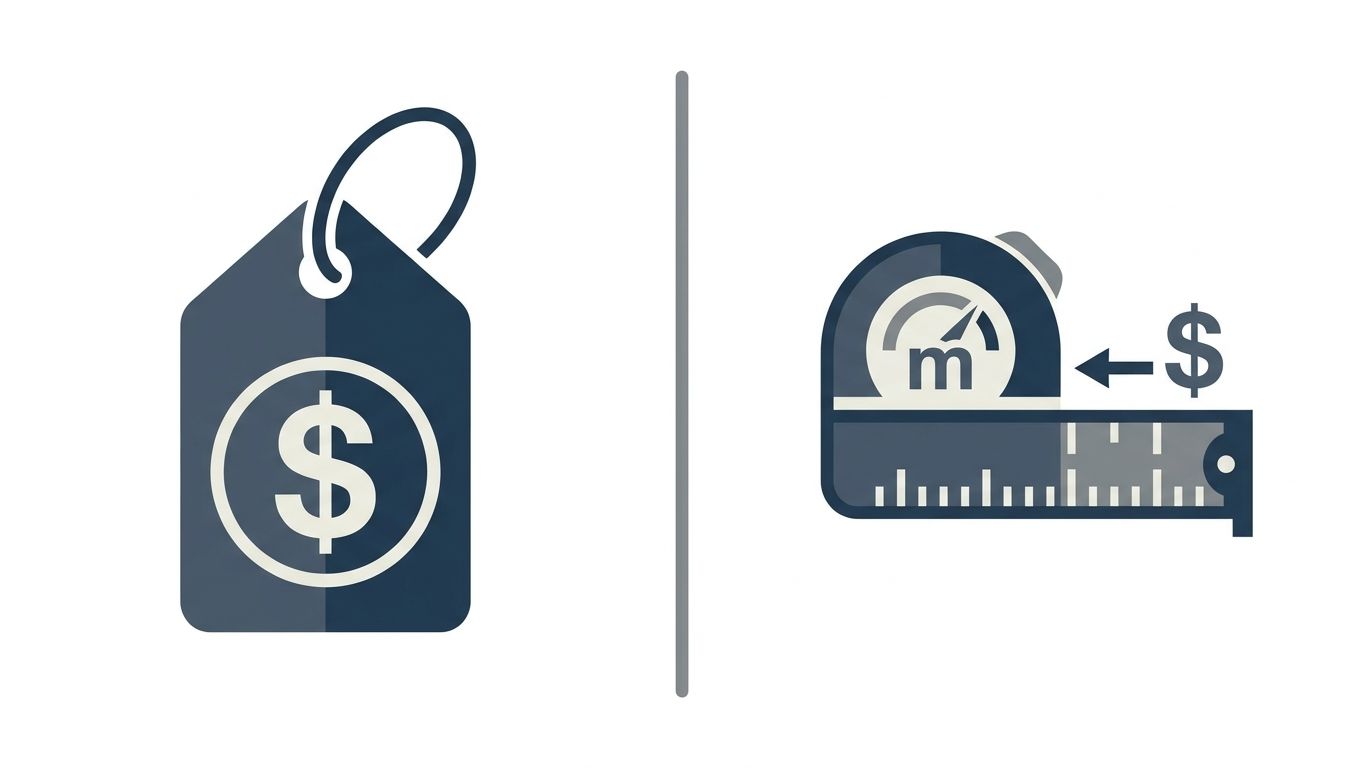
73% of our clients come to us after a bad hourly-billing experience. They started a project at EUR 100/hour, expected it to take 400 hours, and ended up at 700+ hours with a product that still wasn't done.
We switched to fixed-scope pricing in our first year. Not because it's trendy. Because hourly billing creates a structural incentive to be slow, and we wanted to be fast.
Key Takeaways > - Hourly billing rewards inefficiency. Fixed-scope rewards speed and precision. > - We scoped ProxControl across 2 algorithm phases with fixed pricing. Both delivered on budget. > - Fixed-scope forces better planning upfront, which reduces mid-project chaos by 80% in our experience.
The Incentive Problem With Hourly Billing
Hourly billing seems fair on the surface. You pay for the time you use. But the incentives are backwards.
When an agency bills hourly, every hour of work is revenue. A bug that takes 8 hours to fix is 8 hours of billable work. A refactor that takes 3 weeks is 3 weeks of revenue. There's no financial incentive to solve problems faster.
We're not saying agencies deliberately slow down. But humans respond to incentives. When speed costs you money, you unconsciously stop optimizing for speed.
Fixed-scope flips this. Our margin depends on shipping efficiently. If we estimated a feature at 40 hours and finish in 25, we keep the difference. If it takes 60 hours, we eat the cost. Every minute we waste comes directly out of our profit.
This means we obsess over efficiency. We reuse proven patterns. We kill scope creep before it starts. We make architectural decisions that save time downstream, not decisions that generate more billable hours.
The Math: Hourly vs Fixed on the Same Project
Here's a real comparison. We won't name the client, but we'll use actual numbers.
The hourly scenario (what they were quoted elsewhere): - Estimated hours: 600 - Rate: EUR 120/hour - Estimated total: EUR 72,000 - Actual hours (based on similar projects at that agency): 800-1,000 - Realistic total: EUR 96,000-120,000
Our fixed-scope quote: - Total: EUR 60,000 - Delivered in: 6 months - Actual cost to client: EUR 60,000
The client saved somewhere between EUR 36,000 and EUR 60,000. And they knew the price before we started.
Here's the part that matters most: the hourly estimate was "600 hours" but no one signs a contract that caps at 600 hours. The scope expands. Bugs appear. The client asks for "one small change" that cascades into 40 hours of work. None of this is unusual. It's how hourly billing works.
With fixed-scope, we absorb that complexity. We plan for bugs. We plan for scope questions. We build buffer into the estimate, not into the invoice.
How We Scope a Fixed-Price Project
Fixed-scope doesn't mean we guess. It means we do more planning upfront.
Phase 1: Discovery (1-2 weeks) We write a product brief with the founder. Every feature is listed. Every integration is documented. Every "nice to have" is labeled as such and pushed to a future phase.
Phase 2: Estimation (2-3 days) We break the brief into sprints. Each sprint is 2 weeks. Each sprint has a fixed deliverable. We estimate effort based on our past project data, not abstract guesses.
Phase 3: Pricing (1 day) We add a buffer for unknowns (typically 15-20%) and present a single fixed price. The client says yes or no. If they say yes, that number doesn't change unless they add scope.
Phase 4: Delivery (sprint-based) We deliver working software every 2 weeks. The client sees progress in real time. If priorities shift, we can swap features between sprints without changing the total price.
This process takes more effort upfront than an hourly quote. That's the point. The planning we do in week one saves everyone money in months two through six.
ProxControl: Fixed-Scope Across 2 Algorithm Phases
ProxControl needed industrial spray-paint velocity drift measurement. This isn't a standard CRUD app. It's deep-tech signal processing.
We scoped it as two fixed-price phases.
Phase 1: Core algorithm Fixed price. We built the initial velocity measurement system, tested it against factory data, and delivered a working prototype. The scope was clear: measure velocity drift with X accuracy at Y sampling rate.
Phase 2: False positive reduction Fixed price. We reduced false positives by 90% using hysteresis thresholds, debounce logic, and movement gating. This phase was technically harder than Phase 1, but because we'd learned so much during Phase 1, we could scope it precisely.
If this had been hourly, Phase 2 would have ballooned. Algorithm work is inherently experimental. You try approaches. Some fail. With hourly billing, every failed experiment is a billable event. With fixed-scope, failed experiments are our cost of doing business.
The client paid exactly what we quoted for both phases. We ate the cost of three algorithm approaches that didn't work in Phase 2. That's our problem, not theirs.
The Contrarian Take: Fixed-Scope Is Worse for Simple Projects
Here's where we disagree with the fixed-scope evangelists: it's not always better.
If you need 20 hours of bug fixes on an existing codebase, hourly billing is fine. The scope is clear, the work is straightforward, and the overhead of a formal scoping process isn't worth it.
Fixed-scope shines when: - The project is complex enough that scope creep is a real risk - The budget matters (which is always, for startups) - The timeline is measured in months, not days - There are unknowns that could expand or contract the work
We use fixed-scope for every project above EUR 5k. Below that, we sometimes do day-rate work. But anything substantial gets a fixed number, because the alignment of incentives is too important to skip.
What Happens When We Estimate Wrong?
We've underestimated projects. It happens. Here's how we handle it.
If the scope hasn't changed and we underestimated, we deliver what we promised at the price we quoted. Our margin shrinks or disappears. That's the deal.
If the client adds scope mid-project, we write a change order with a fixed price for the addition. The original scope stays at the original price. The new scope gets a new number. Simple.
In 2+ years of fixed-scope pricing, we've had exactly two projects where we significantly underestimated. Both were deep-tech projects with genuine unknowns. We delivered both at the quoted price. We learned from both and improved our estimation process.
The fear of underestimating is what keeps most agencies on hourly billing. They'd rather pass the risk to the client. We'd rather carry the risk ourselves and get better at estimating.
Why Founders Should Demand Fixed Pricing
If you're a founder shopping for an agency, here's what hourly billing really means: the agency isn't confident enough in their estimate to stand behind it.
That's it. Every argument for hourly billing ("it's more flexible," "you only pay for what you use," "we can't predict the work") translates to: we don't know how long this will take, and we want you to pay for our uncertainty.
A good agency can estimate within 15-20% of actual effort. If they can't, they either haven't done enough discovery or they don't have enough experience with your type of project.
Ask any agency: "Will you cap your hourly billing at a fixed amount?" Watch them hesitate. If they won't cap it, they're telling you they expect to exceed the estimate. And you'll pay for every extra hour.
How Fixed-Scope Pricing Changes the Relationship
The best part of fixed pricing isn't the cost savings. It's the relationship.
With hourly billing, every conversation has a subtext. The client wonders: "Is this meeting billable? Is this Slack message billable? Am I paying EUR 120 for this 10-minute call?" They start rationing communication. Which means they stop giving feedback. Which means the product suffers.
With fixed-scope, communication is free. We want the client to be in our Slack channel every day. We want feedback on every sprint demo. We want questions early, not late. None of this costs them extra, so they actually talk to us.
Better communication means better products. Fixed-scope pricing creates the conditions for good communication. Hourly billing creates the conditions for silence.
Frequently Asked Questions
What if my requirements change mid-project?
We handle changes through formal change orders. The original scope stays at the original price. New features or changes get a separate fixed-price quote. You approve the addition before we start it. Most projects have 1-2 change orders. The total increase is usually under 15%.
Isn't fixed-scope pricing just hourly pricing with a markup?
No. Hourly pricing with a cap is still hourly pricing because the agency bills every hour up to the cap. Fixed-scope means we quoted a deliverable at a price. If we finish in half the estimated hours, the price doesn't drop. If it takes twice the hours, the price doesn't rise. The incentive structure is fundamentally different.
How do you handle projects with genuine unknowns?
We break them into phases. ProxControl's algorithm work was genuinely uncertain, so we scoped Phase 1 and Phase 2 separately. Each phase had a fixed price based on what we knew at the time. This limits risk for both sides without falling back to hourly billing.
What types of projects don't work with fixed-scope?
Ongoing maintenance, staff augmentation, and very small tasks (under 20 hours) are better suited to hourly or day-rate pricing. For anything that looks like a project with a beginning, middle, and end, fixed-scope works better.
*Want a fixed-scope quote for your project? Book a 30-minute call and we'll give you a number within 48 hours. Or see our services for pricing on SaaS, apps, sites, and deep-tech builds.*
From the studioExplore our services
Notes on building fast.
One short email a month from the RalphNex team. Projects we shipped, ideas we tested, and what worked.
No spam. Unsubscribe anytime.

RalphNex Team
Editorial
Notes, ideas, and case studies from the team behind RalphNex. Design and engineering for founders.
More from the RalphNex Journal
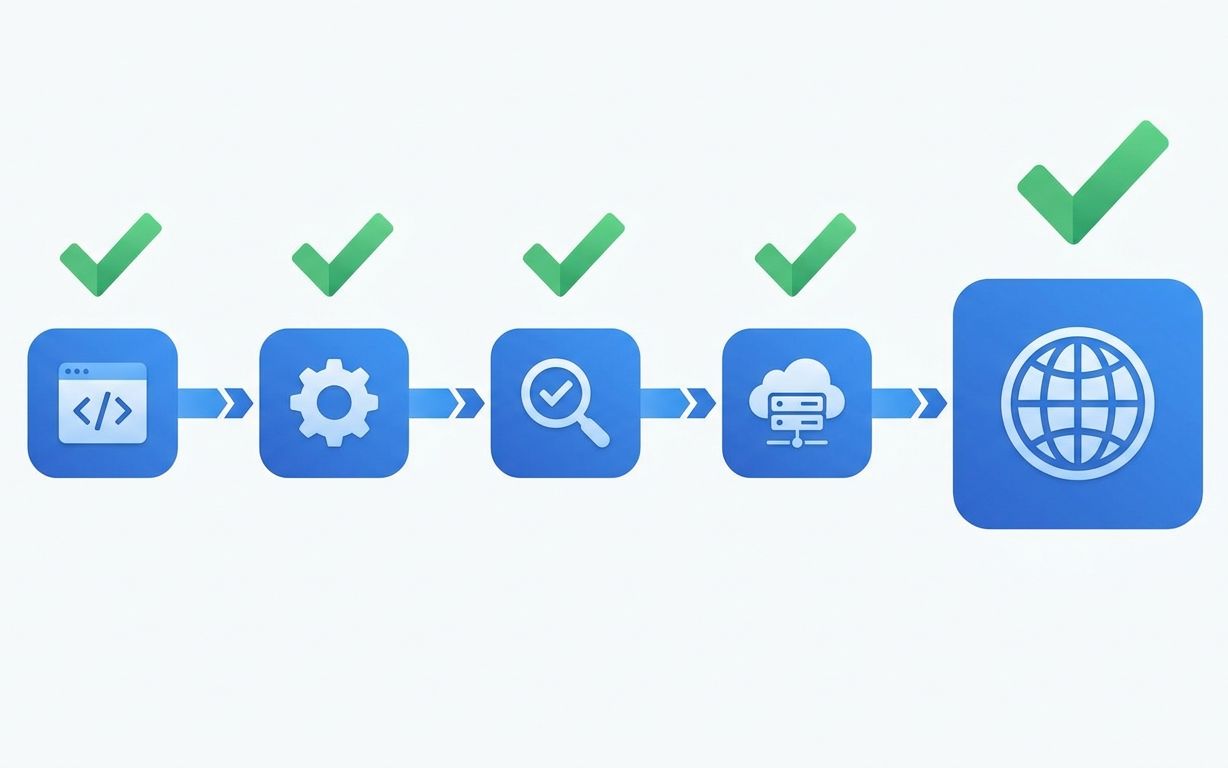
How We Set Up CI/CD for Every Client Project
Every project we ship gets the same CI/CD pipeline. It takes 4 hours to set up and saves 200+ hours over the project lifetime.

SaaS Development for Edtech: Building for Schools and Students
Schools buy software in June, onboard in August, and complain in September. Your edtech product needs to survive all three.