
Our Tech Stack for Shipping Fast in 2026
We've shipped 7 products on the same stack. Next.js, Tailwind, PostgreSQL, Vercel. Zero time spent evaluating trendy frameworks. Here's why boring wins.

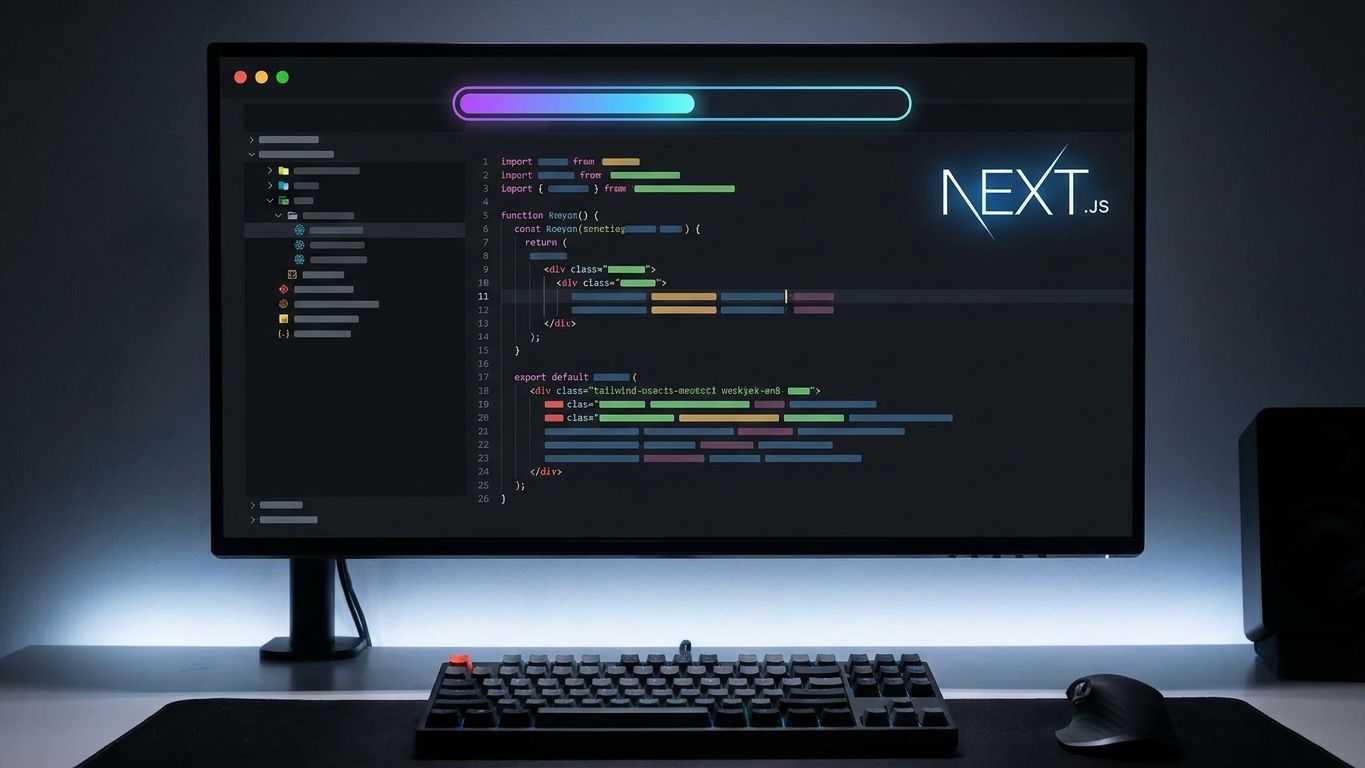
7 products. Same stack. Pushary, Morta, Shamaze, CryptoTicker, Automaticall, ProxControl, Equipment Rentalz. Every one built on Next.js, Tailwind CSS, PostgreSQL, and deployed to Vercel. We haven't changed our core stack in over two years.
That's not laziness. It's a competitive advantage. While other agencies spend weeks evaluating whether to use the latest framework release, we're writing product code on day one. Our stack is boring. It's also the reason we ship a full SaaS in 30 days and a marketing site in 48 hours.
Key Takeaways > - Use the stack you know best, not the stack with the most GitHub stars this month. > - Boring technology ships faster because you've already solved every common problem on it. > - The stack accounts for maybe 5% of a product's success. Execution accounts for the other 95%.
The Full Stack
Here's everything we use, with reasoning for each choice.
Frontend: Next.js (App Router)
Next.js gives us server-side rendering, static generation, API routes, and file-based routing in one framework. We don't need a separate backend for most projects. The App Router (introduced in v13, now mature) handles layouts, loading states, and error boundaries cleanly.
Why not Remix, SvelteKit, or Nuxt? All fine frameworks. We picked Next.js three years ago when the App Router was stabilizing, learned its quirks deeply, and never looked back. The switching cost to another framework would be weeks of relearning edge cases for marginal benefits. We'd rather spend those weeks shipping product features.
Styling: Tailwind CSS
Utility-first CSS. No context-switching between component files and stylesheets. No naming conventions to debate. No CSS-in-JS runtime overhead. We can style a complete page faster in Tailwind than any other approach because we've memorized the utility classes.
The common criticism - "the HTML looks messy" - is irrelevant. Users don't read HTML. Developers who've used Tailwind for a month never want to go back to writing CSS files. The co-location of styling and markup eliminates an entire category of bugs where styles conflict or cascade unexpectedly.
Database: PostgreSQL
The most reliable relational database in existence. Full-text search built in. JSON columns for flexible data. Excellent tooling. Massive community. Free with Supabase's generous tier or self-hosted.
We don't use MongoDB. Most SaaS products have relational data (users have organizations, organizations have projects, projects have items). Modeling relational data in a document database creates complexity that relational databases handle natively. The "NoSQL is more flexible" argument breaks down the moment you need to query across collections.
Our contrarian take: if you're building a SaaS product and you're using MongoDB because "it's more flexible," you'll spend more time working around that flexibility than you saved by avoiding schema design. PostgreSQL with JSON columns gives you the relational structure you need and the schema flexibility for the parts that genuinely vary.
ORM: Drizzle
Type-safe database queries with zero abstraction overhead. We switched from Prisma to Drizzle in 2025 and haven't looked back. Drizzle generates SQL you can read. Prisma generates SQL you can't. When something goes wrong at the database level, readable SQL is the difference between a 30-minute debug and a 3-hour one.
Drizzle also handles migrations cleanly. Schema changes generate migration files that we review before applying. No "shadow database" surprises like Prisma's approach.
Authentication: Clerk
User authentication is the highest-risk code in a product. Email/password, OAuth, session management, password reset, email verification - each has security implications that are easy to get wrong. Clerk handles all of it for EUR 0 at startup scale and integrates with Next.js in under an hour.
We stopped building custom auth after spending 3 days debugging a session token race condition on a client project. Auth providers exist so you don't make that mistake.
Payments: Stripe
Stripe Checkout for simple subscriptions. Stripe Billing for usage-based pricing. Every SaaS we build uses Stripe because the documentation is excellent, the webhooks are reliable, and the dashboard handles invoicing and tax compliance.
Pushary's entire billing integration - subscription plans, checkout flow, customer portal for managing subscriptions, webhook handling for failed payments - took 1.5 days. With any other provider, that's a week.
Hosting: Vercel
Automatic deployments on every git push. Preview deployments for every pull request. Global CDN. Serverless functions. SSL certificates. All managed. We don't think about infrastructure until we need to.
The cost is reasonable for most SaaS products. The free tier covers development. Pro (EUR 20/month) covers most production workloads. Enterprise is only necessary for high-traffic applications.
For projects that outgrow Vercel's model (long-running processes, WebSocket servers, heavy compute), we add a separate backend on Railway or Fly.io. But Vercel handles 90% of our projects end-to-end.
Email: Resend
Transactional emails (welcome, password reset, notifications) through Resend. Clean API, high deliverability, React email templates. Setup takes 30 minutes including domain verification.
Monitoring: Sentry
Error tracking and performance monitoring. Catches production bugs before users report them. The Next.js integration is one config file. We've caught critical bugs through Sentry alerts that would have taken days to surface through support tickets.
Analytics: PostHog
Product analytics, session recording, and feature flags. Self-hostable if clients need data sovereignty. The event-based model matches how SaaS products actually work: users do things, and you want to know which things correlate with retention.
Why Boring Technology Wins
The tech industry has an obsession with novelty. New frameworks launch monthly. Each promises better performance, better DX, better everything. The problem: every new tool has undiscovered bugs, sparse documentation, and a small community.
Here's what boring technology gives you:
Every problem has been solved before. When we hit an issue with Next.js, the answer is on Stack Overflow, GitHub Issues, or the Vercel Discord. When you hit an issue with a framework released 6 months ago, the answer might not exist yet. You become the person who discovers and documents the bug.
Hiring is easier. Next.js developers are abundant. Developers who know the latest meta-framework released last quarter are rare and expensive. If our clients need to hire developers to maintain the product after handoff, they can find Next.js developers in a week.
Performance is optimized. Next.js and PostgreSQL have been performance-tuned by thousands of contributors over years. A new framework might be faster in benchmarks but slower in production because nobody has optimized the edge cases yet.
Security is battle-tested. Every popular framework has had its major security vulnerabilities discovered and patched. New frameworks haven't been attacked at scale yet. That doesn't mean they're secure - it means their vulnerabilities haven't been found.
What We Evaluate (and How Quickly We Reject It)
We evaluate one new tool per quarter. Not because we should, but because clients ask about specific technologies and we need informed opinions.
Our evaluation criteria:
1. Does it solve a problem we actually have? Not a theoretical problem. A real problem we've encountered on multiple projects. If no, reject. 2. Is the migration cost worth the benefit? Switching from Prisma to Drizzle saved us 2-3 hours per project in debugging. That justified the migration cost. Switching from Next.js to Remix would save us nothing because we've already solved Next.js's pain points. 3. Is it maintained by a company or a person? One-person open source projects are risky dependencies. We need tools backed by teams or companies that won't disappear if the maintainer gets a different job. 4. Can our clients' future developers use it? We build products that get handed off. If the tool requires deep expertise to maintain, it's a liability for the client even if it's an advantage for us.
Most tools fail criteria 1. The rest usually fail criteria 2. We add maybe one new tool per year.
The Stack Doesn't Matter (Mostly)
Here's the most honest thing we can say about tech stacks: your choice of framework will not determine whether your product succeeds or fails. The stack is 5% of the outcome. The other 95% is:
- Did you build the right thing? (Product-market fit) - Did you build it fast enough? (Speed to market) - Is it reliable? (Engineering quality) - Can someone else maintain it? (Documentation and code quality)
We've seen successful SaaS products built on WordPress, PHP, Rails, Django, and vanilla JavaScript. We've seen failed products built on the most sophisticated modern stacks. The technology doesn't close deals, acquire users, or generate revenue. The product does.
Our stack is optimized for one thing: shipping speed. We can build faster on this stack than any other because we've used it thousands of times. If you're a Rails shop that ships fast on Rails, don't switch to Next.js because of a blog post. Ship on what you know.
The Exception: When the Stack Does Matter
Two scenarios where technology choice is critical:
Real-time, high-concurrency applications. Chat apps, live collaboration tools, gaming backends. These need WebSocket support, efficient connection management, and low-latency data sync. Next.js alone doesn't handle this - you need Elixir, Go, or a dedicated real-time service alongside your web framework.
Compute-intensive applications. ML inference, video processing, complex simulations. These need languages and runtimes optimized for CPU performance. Python for ML, Rust or Go for high-throughput processing. JavaScript is the wrong tool here.
For ProxControl, our deep-tech project involving industrial spray-paint velocity measurement, we used specialized signal processing tools alongside our standard web stack. The dashboard was Next.js. The algorithm was purpose-built. Choosing the right tool for the compute-heavy part mattered. The web framework choice didn't.
Frequently Asked Questions
Should I use Next.js for my SaaS in 2026?
If you or your team already know React, yes. Next.js is the most mature full-stack React framework with the largest community. If your team knows Vue, use Nuxt. If they know Svelte, use SvelteKit. The best framework is the one your team ships fastest with. Don't switch stacks for theoretical advantages.
Is PostgreSQL better than MongoDB for SaaS?
For most SaaS products, yes. SaaS data is inherently relational (users belong to organizations, organizations have subscriptions, subscriptions have invoices). PostgreSQL handles these relationships natively. MongoDB requires you to model them manually. Use MongoDB if your data is genuinely document-shaped (CMS content, IoT sensor readings, log data).
How often should you update your tech stack?
Evaluate quarterly, change annually at most. Every stack change has a learning curve that temporarily slows you down. The benefit needs to be substantial and proven, not theoretical. We changed one tool (Prisma to Drizzle) in the last 18 months. Everything else stayed the same because it works.
Do clients care about the tech stack?
Technical co-founders sometimes have strong opinions. Non-technical founders almost never ask. What both groups care about is: will the product work, will it be fast, and can my future team maintain it? Next.js, PostgreSQL, and Tailwind satisfy all three because they're industry-standard, well-documented, and widely known.
Notes on building fast.
One short email a month from the RalphNex team. Projects we shipped, ideas we tested, and what worked.
No spam. Unsubscribe anytime.

Dash Santosh
Founding Engineer
Co-founder and engineer at RalphNex. Been coding since 14, shipping fast since.
More from the RalphNex Journal
How We Set Up CI/CD for Every Client Project
Every project we ship gets the same CI/CD pipeline. It takes 4 hours to set up and saves 200+ hours over the project lifetime.

SaaS Development for Edtech: Building for Schools and Students
Schools buy software in June, onboard in August, and complain in September. Your edtech product needs to survive all three.